Forex Trading for Beginners
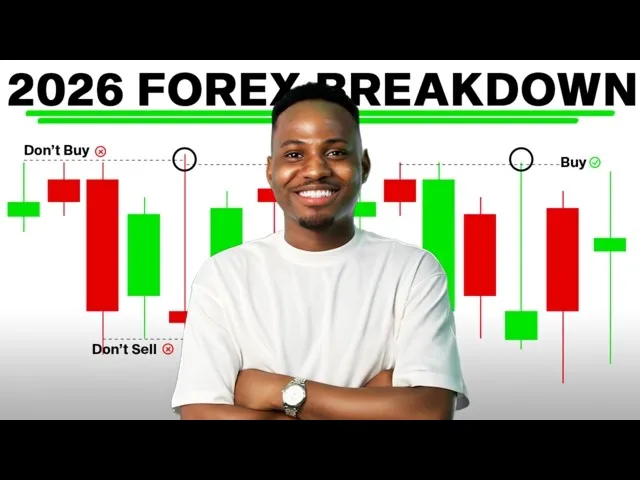
Video: How To Start Forex Trading For Beginners’ 2026 (Full Course)
You can order the same kind of articles for your own video to boost it on YouTube and Google. Just message the Telegram bot @sat_sit_bot. It writes articles around your video, embeds the video and publishes them on popular niche websites (no ads). Try it free: 50 articles on us.
Forex trading for beginners means buying and selling currency pairs on the foreign exchange market, the largest financial market in the world. To start, you need a regulated broker, a trading platform like MetaTrader 5, a basic strategy, and strict risk rules. This guide walks you through each step, from opening an account to placing your first trade, based on the full beginner course by Jeffrey Benson Forex. For daily free trade ideas, you can also join the free signal channel at Fire Pips Signals.
What Forex Is and How the Currency Market Works
Forex is the global marketplace where national currencies are exchanged, and it operates 24 hours a day, five days a week across major financial centers. Currencies are always traded in pairs, such as EUR/USD or GBP/JPY, where the first currency is the base and the second is the quote. The price tells you how much of the quote currency is needed to buy one unit of the base currency. For example, if EUR/USD is 1.1000, one euro costs 1.10 US dollars.
The forex market is decentralized, meaning there is no central exchange; trading happens electronically between banks, brokers, and individual traders. Daily trading volume exceeds $7.5 trillion, making it the most liquid market in the world. Liquidity is highest during the overlap of the London and New York sessions, typically from 8:00 to 12:00 EST. Beginners should focus on major pairs like EUR/USD, GBP/USD, and USD/JPY because they have tighter spreads and more predictable behavior.
Essential Tools and Account Setup for Forex Trading
To trade forex, you need a broker, a trading platform, a charting tool, and a risk management plan. The video recommends specific tools and a broker, but you should always verify regulation and test with a demo account first.
- Choose a regulated broker. Look for oversight from authorities like the FCA, ASIC, or CySEC. The course suggests Assex Markets; you can sign up via their registration link: Assex Markets sign-up.
- Download MetaTrader 5 (MT5). MT5 is available for desktop, web, and mobile. It provides real-time charts, order execution, and technical indicators.
- Set up TradingView. TradingView is a charting platform for market analysis, drawing tools, and community ideas.
- Open a demo account. Practice with virtual money until you consistently follow your plan.
- Create a trading journal. Record every trade: entry, exit, reason, and emotion.
Understanding Leverage, Margin, and Lot Sizes
Leverage lets you control a large position with a small amount of capital, while margin is the deposit required to open and maintain that position. A standard lot is 100,000 units of the base currency; a mini lot is 10,000, a micro lot is 1,000, and a nano lot is 100. The pip value depends on the pair and lot size. For EUR/USD, one pip on a standard lot equals $10, on a mini lot $1, and on a micro lot $0.10.
Leverage is expressed as a ratio, such as 1:100 or 1:500. With 1:100 leverage, $1,000 controls a $100,000 position. While leverage amplifies profits, it also amplifies losses. Margin is the portion of your account equity that is set aside as collateral. If losses reduce your equity below the margin requirement, you may face a margin call and your broker can close your positions. Beginners should use low leverage (1:10 or less) until they gain experience.
Building a Simple Forex Strategy with Support and Resistance
A trading strategy is a set of rules that defines when to enter, exit, and manage risk. The course emphasizes technical analysis using support and resistance levels, which are price zones where the market has previously reversed or stalled. Support is a floor where buying pressure may emerge, and resistance is a ceiling where selling pressure may appear.
To build a basic strategy:
- Identify key support and resistance levels on higher timeframes (H4 or Daily).
- Wait for price to approach a level and show a reaction (e.g., a bullish candlestick pattern at support).
- Enter the trade with a stop-loss just beyond the level and a take-profit at the next opposing level.
- Risk no more than 1–2% of your account per trade.
- Journal the trade and review your performance weekly.
Traders also use fundamental analysis (news, economic data) and sentiment analysis, but beginners should master one approach first. The video stresses that you don't need a high win rate to be profitable; with a risk-reward ratio of 1:2 or better, you can win less than half of your trades and still make money.
Placing and Managing Your First Trade on MetaTrader 5
Placing a trade on MT5 involves selecting the currency pair, setting order type, lot size, stop-loss, and take-profit, then executing. Follow these steps:
- Open the Market Watch window and find your pair (e.g., EUR/USD).
- Right-click and select "New Order."
- Choose order type: Market Execution (instant) or Pending Order (limit/stop).
- Enter lot size (start with 0.01 micro lot).
- Set stop-loss and take-profit levels in the modification box.
- Click "Place" to execute.
After entry, monitor the trade but avoid impulsive changes. Move stop-loss to breakeven once the trade moves in your favor. Use trailing stops to lock in profits. Remember that the bid price is what buyers are willing to pay, the ask is what sellers want, and the spread is the difference — your broker's fee.
Common Mistakes and the Psychology of Trading Forex
Most beginner losses come from poor risk management, emotional decisions, and lack of discipline, not from a bad strategy. The course highlights these pitfalls:
- Overleveraging: Using too much leverage can wipe out an account quickly.
- Revenge trading: Trying to recover losses immediately leads to bigger losses.
- Ignoring stop-losses: Hoping the market will turn around often ends in large drawdowns.
- Overtrading: Taking too many trades without a clear setup.
- Not journaling: Without records, you can't identify patterns in your behavior.
Emotional control is crucial. Develop patience, stick to your plan, and accept that losses are part of trading. Many viewers of the course noted that psychology and patience matter more than a perfect strategy. Treat trading as a skill that takes time to develop.
Useful Links from the Course
- Free daily signal channel: Fire Pips Signals
- Broker registration: Assex Markets
- Premium signal group: Jeffrey Benz Help Bot
- Student plans: Fire Pips FX
Final Thoughts on Starting Forex Trading
Forex trading is a skill that requires education, practice, and discipline. Start with a demo account, focus on risk management, and keep a trading journal. The full course by Jeffrey Benson Forex provides a structured path from basics to live trading, and you can supplement it with the free signals at Fire Pips Signals. Remember that most beginners fail because they skip the fundamentals; take your time, protect your capital, and trade with a plan.
Key takeaways
- Forex is the $7.5 trillion-a-day market where currencies trade in pairs like EUR/USD.
- Beginners need a broker, MetaTrader 5, TradingView, and a risk plan before placing a trade.
- Leverage magnifies both profits and losses; margin is the capital required to open a position.
- A standard lot is 100,000 units; pip value varies by pair and lot size.
- Risk management — risking 1–2% per trade — is more important than a high win rate.
Questions & answers
How much money do I need to start forex trading?
You can start with as little as $10–$50 with a micro account, but it's recommended to begin with a demo account and only risk 1–2% per trade. Many brokers allow accounts from $5, but to trade meaningfully and absorb losses, $500–$1,000 is more realistic for a beginner using low leverage.
Is forex trading profitable for beginners?
Profitability requires discipline, risk management, and a proven strategy. Most beginners lose money initially, but with proper education and practice, it's possible to become consistently profitable. The course emphasizes that you don't need to win every trade—a good risk-reward ratio and patience can lead to long-term gains.
What is the best time to trade forex?
The best times are when liquidity is highest: the London session (3:00–12:00 EST) and the New York session (8:00–5:00 EST), especially the overlap from 8:00 to 12:00 EST. Major pairs like EUR/USD and GBP/USD have tighter spreads and more movement during these hours.
Can I trade forex with a small account?
Yes, with a micro or nano lot account you can trade with a small balance. However, you must use strict risk management—risk only 1% per trade—and avoid high leverage. Many brokers offer cent accounts that allow you to trade with as little as $10.
Source: How To Start Forex Trading For Beginners’ 2026 (Full Course) · Markdown version