How to Start Trading Futures Live Alongside a Day Trading Stream
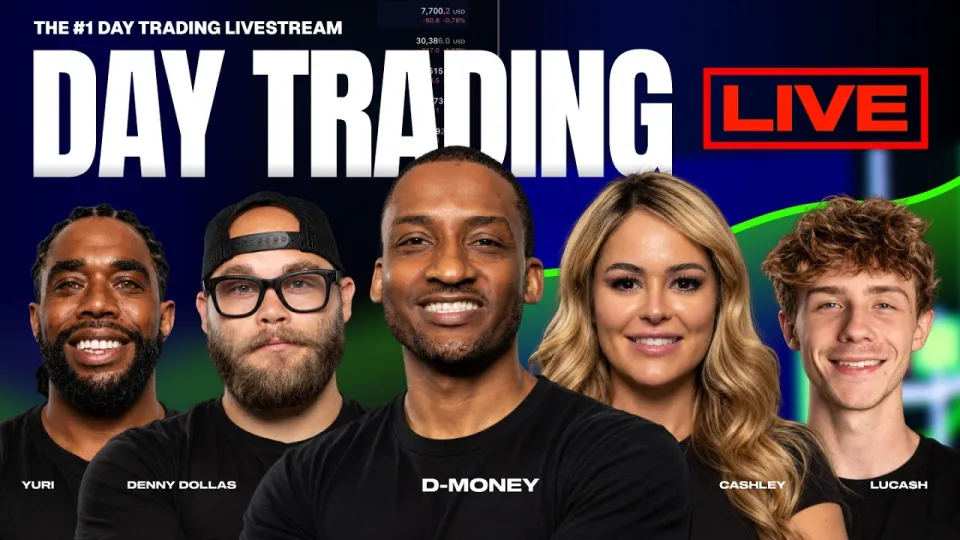
Video: LIVE DayTrading! #1 Watched Futures Trading Show!
You can order the same kind of articles for your own video to boost it on YouTube and Google. Just message the Telegram bot @sat_sit_bot. It writes articles around your video, embeds the video and publishes them on popular niche websites (no ads). Try it free: 50 articles on us.
Trading futures live means executing a defined setup on a real account while a public stream runs in the background, and the fastest route is to learn one repeatable pattern, fund it through a prop firm evaluation, and cap risk before you ever click buy. Watching a daily futures show such as the BDH broadcast hosted by Patrick Wieland gives you the market context, the prop firm shortlist and the risk habits in one place, but the execution stays yours. This guide breaks down how to start trading futures with a live stream as your training environment rather than your signal service.
What a live futures trading show actually gives you
A live day trading broadcast is a research and accountability tool, not a trade alert service. The BDH stream runs every trading day from two floors in South Florida and California and mixes real-time futures execution with market analysis, prop firm reviews and giveaways. The crew is small and named: Patrick Wieland, Damareous Young, Lucas Kennard and Denny Jones. That format matters because you see the boring parts too, the waiting, the skipped setups and the scratch trades, which recorded highlight reels never show.
What the stream does not do is tell you your entry, your size or your stop. Two viewers asked essentially the same thing in the comments under the broadcast: which setup is being worked, and where the presenter's setup can be bought. That question is the honest starting point for anyone new, because the visible trade is the last 5% of the process.
How to start trading futures with a live stream in six steps
- Pick one instrument and one session. Index futures such as the E-mini S&P 500 (ES) and Micro E-mini (MES) are the standard starting point because tick values are simple and liquidity is deepest during the US cash open. Stay in a single product for at least a month.
- Learn one setup, not five. A single repeatable pattern, whether it is a session open reversal, a failed breakout or a liquidity sweep, gives you enough repetitions to build real data. The stream is useful here because you can compare your read of the same chart with someone trading size.
- Write the rules down before you trade. Entry trigger, stop placement, target, maximum trades per session and the time you stop for the day. If a rule cannot be written in one sentence, it is not a rule yet.
- Fund it through a prop firm evaluation instead of risking savings. Evaluations give you buying power for a fee and force you to respect a drawdown limit, which is the single most useful constraint for a beginner.
- Trade the smallest size the platform allows. On micro contracts you can take the same setups with a fraction of the risk and still feel the psychological pressure of a live position.
- Journal every session. Screenshot the entry, note whether you followed your rules, and track rule adherence separately from profit and loss. Adherence is the metric that predicts survival.
Prop firms and the rules that decide whether you get paid
The prop firm model is simple to describe and hard to pass: you pay a monthly or one-time fee for a simulated account, hit a profit target without breaching a drawdown limit, and then trade a funded account for a split of the profits. Rankings published alongside the stream place Lucid Trading first, TakeProfitTrader second and Apex Trader Funding third, with Tradeify, Legends Trading, BluSky Trading, TradeDay and MyFundedFutures filling out the rest of the list. Comparison pages and discount codes for these firms are aggregated at onlypropfirms.com.
Before you buy any evaluation, check four numbers:
- Profit target, typically around 6% to 8% of account size on a standard evaluation.
- Maximum daily loss, usually in the 4% to 5% range, and whether it is a hard stop or a trailing intraday figure.
- Maximum overall drawdown, which is often trailing and can end an account even while you are profitable on the day.
- Consistency rules and minimum trading days, which can block a payout even after you hit the target.
The trap is not the fee, it is the trailing drawdown. A trader who makes money steadily but never banks a payout because the drawdown floor follows the equity curve is a very common story in futures evaluations, and it is entirely avoidable once you read the rulebook.
Risk limits that keep a small futures account alive
Risk control is the part of trading that determines whether you are still here in six months, and it is mechanical rather than intuitive. A workable starting framework: risk no more than 1% of the account on a single trade, cap daily loss at 2% to 3%, and stop trading for the day once that number is hit regardless of how the chart looks. On a 50,000 dollar evaluation account that is 500 dollars of risk per trade, which on MES is a defined number of ticks you can calculate before entry rather than after.
Position sizing follows from the stop, never the other way around. Decide where you are wrong first, measure the distance in ticks, then divide your dollar risk by the tick value. Traders who size first and place the stop wherever it feels comfortable are the ones who blow evaluations on a single bad session. The second rule is a hard stop on the number of trades: three to five quality attempts per session is plenty, and overtrading is what turns a small red day into a breached account.
Common questions from traders watching live futures streams
Newer viewers tend to ask the same three things, and each has a practical answer. The first is about the setup itself, which is fair, because a stream shows the execution but not always the reasoning behind it. If you want the presenter's framework spelled out, the two-hour course teaching Patrick Wieland's strategy is sold for 99 dollars through onlypropfirms.com, and it is the same approach traded live on air. Buying a course does not replace screen time, but it shortens the guessing phase.
The second recurring question is which prop firm to choose first. The honest answer is that the ranking matters less than the rule set matching your style, so compare drawdown type, payout schedule and platform support before comparing marketing. The third is about copy trading and automation, which many viewers raise as a shortcut. Copy trading removes execution errors but also removes the learning loop, and it does not protect you if the account you copy blows its own drawdown limit.
Why daily screen time beats any single indicator
Consistency in futures trading comes from repetition under real conditions, which is exactly what a daily live show provides. Watching the same market open, the same instrument and the same handful of setups every session builds pattern recognition that no indicator package can install. The stream also acts as a social checkpoint: trading alone makes it easy to break your own rules quietly, while trading alongside a public broadcast makes the deviation obvious.
Use the broadcast as a calendar anchor rather than a signal source. Show up, mark your levels before the open, take your one or two setups, log them, and compare notes afterwards. That loop, repeated for a few months, is what separates traders who pass an evaluation from traders who keep buying new ones.
The bottom line on trading futures with a live show
Starting to trade futures with a live stream works when you treat the stream as a classroom and your own rulebook as the teacher. Learn one setup, fund it through an evaluation whose drawdown rules you have actually read, keep risk per trade near 1% and daily loss near 2% to 3%, and journal adherence before profit. The BDH broadcast hosted by Patrick Wieland on the Patrick Wieland channel is a useful daily reference point for market context, prop firm comparisons and realistic expectations, provided you remember that no stream, course or ranking removes the risk described in its own disclaimer. Trading futures involves substantial risk, past performance does not guarantee future results, and every account decision is yours.
Key takeaways
- Live futures day trading shows stream every trading day from the BDH floor in South Florida and California, hosted by Patrick Wieland and a four-person crew.
- Prop firm rankings cited on the stream put Lucid Trading first, TakeProfitTrader second and Apex Trader Funding third, followed by Tradeify, Legends Trading, BluSky, TradeDay and MyFundedFutures.
- A two-hour course teaching Patrick Wieland's live-traded strategy is priced at $99 through onlypropfirms.com.
- Most prop firm evaluations cap daily loss around 4-5% of account size and set a profit target near 6-8% before a payout.
- Viewers repeatedly ask which exact setup is being traded and where to buy it, which is the core gap between watching a stream and trading a plan.
Questions & answers
Which futures setup should a beginner learn first?
Start with one setup tied to a specific session, such as an opening range break or a failed breakout at a prior day level, and trade only that pattern for at least a month. Repetition on a single setup produces usable data; switching between five patterns produces noise. Write the entry, stop and target rules down before you place the first trade.
Do I need a prop firm account to start day trading futures?
No, but an evaluation account is often cheaper than funding a personal account large enough to trade index futures comfortably. The trade-off is that evaluations impose profit targets and drawdown limits, so read the rulebook carefully. Many traders buy several evaluations before passing one, which is a cost worth budgeting for.
Why do so many traders fail prop firm evaluations?
The most common causes are trailing drawdown rules that follow the equity curve, oversized positions relative to the daily loss limit, and overtrading after a red start. Consistency rules and minimum trading days also block payouts that traders assume are already earned. Checking these four items before purchase prevents most failures.
Is copy trading a shortcut for learning futures?
Copy trading removes execution mistakes but also removes the decision-making practice that builds skill, so it works better as a supplement than a replacement. It also carries the risk that the copied account breaches its own drawdown limit and stops trading. Learning your own setup alongside a live stream keeps the feedback loop intact.
Source: LIVE DayTrading! #1 Watched Futures Trading Show! · Markdown version